
When you visit a doctor or hospital, you trust that medical professionals will provide competent care. Unfortunately, healthcare mistakes happen more often than you might think. Medical malpractice occurs when a healthcare provider's negligent treatment falls below accepted standards and causes patient harm. If you're considering a medical malpractice lawsuit in Pennsylvania, this guide explains what constitutes malpractice, your legal rights, and the strict procedural requirements you must meet.
Quick Guide: Do You Have a Medical Malpractice Case
Before diving into the legal complexities, answer these three simple questions:
- Did a healthcare provider owe you a duty of care? If you received treatment from a doctor, nurse, hospital, or any licensed or professional medical provider, the answer is yes.
- Did the provider fail to give you reasonable care? This means they did something a competent medical professional would not have done, or failed to do something they should have done.
- Did this mistake cause harm, injury, worsening, or death? The negligence must have directly caused noticeable damage, not just a possibility of future harm.
If you answered "yes" to all three questions, continue reading to learn about your legal options in Pennsylvania.
Common Misconceptions About Medical Malpractice
Many people hesitate to pursue valid claims because of widespread misconceptions about medical malpractice law. These myths can prevent injured patients from seeking justice and obtaining the compensation they deserve.
- "A bad outcome automatically means malpractice." Not true. Even when treatment results in poor outcomes, it may not be malpractice if the provider followed accepted medical standards. Medicine involves inherent risks, and not all complications indicate negligence.
- "If the doctor didn't mean harm, it's not malpractice." Intent doesn't matter. Medical negligence focuses on whether the provider met the standard of care, not whether they intended to cause injury.
- "If we didn't realize the mistake right away, we can't file a claim." Pennsylvania uses a discovery rule, which means the statute of limitations doesn't begin until you discovered or reasonably should have discovered the injury. Many patients still qualify even years after treatment.
- "We need to prove everything ourselves before calling an attorney." You don't need to build your case alone. A medical malpractice attorney handles the investigation, secures medical experts, and gathers evidence on your behalf.
- "If medical records look clean, there's no case." Many medical errors are uncovered through deeper analysis, expert testimony, and comparing treatment timelines, not from what appears in the initial chart.
Elements Required to Prove Medical Malpractice
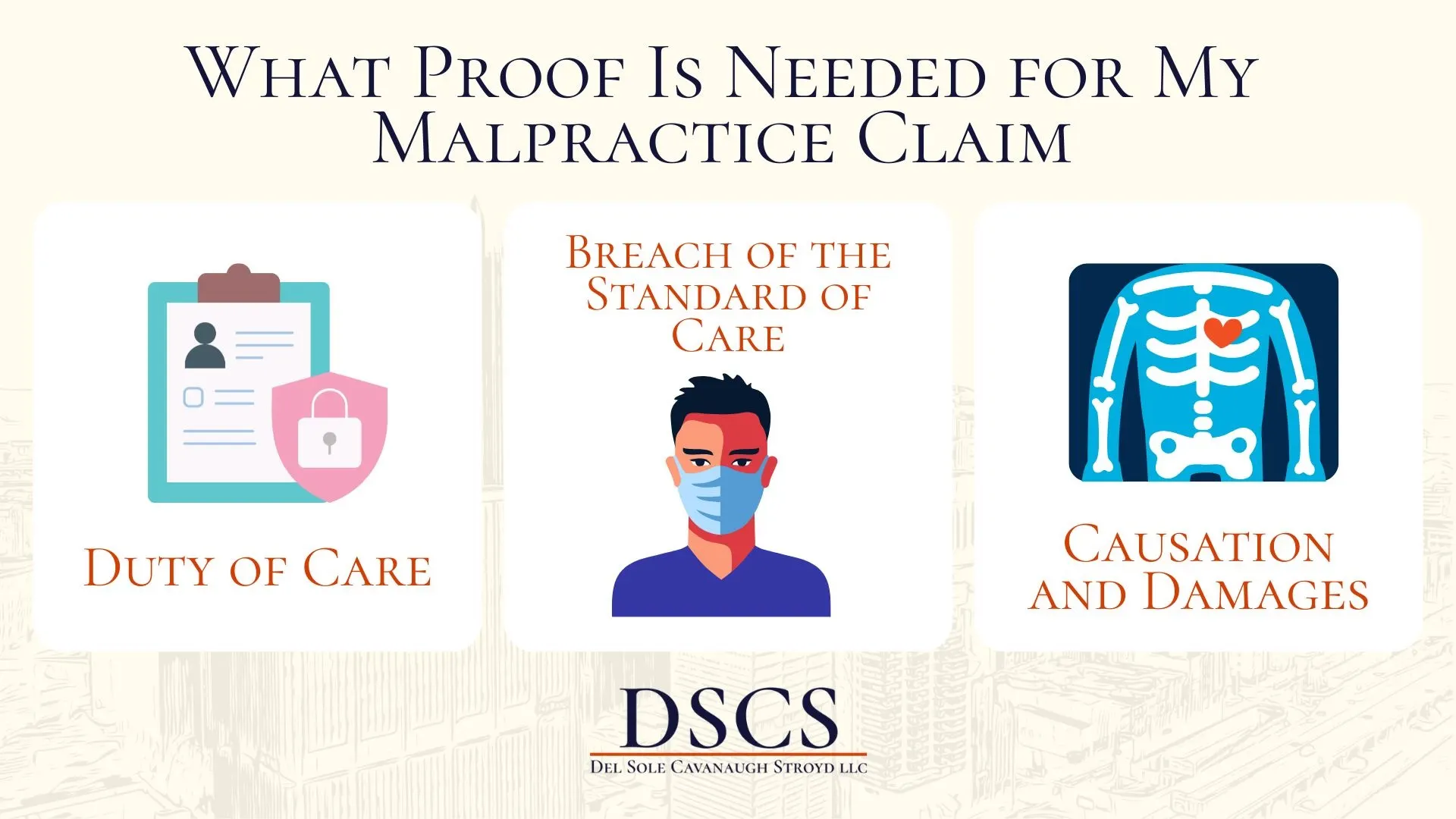
To successfully pursue a medical malpractice claim in Pennsylvania, you must establish three essential elements:
1. Duty of Care
The healthcare provider must have had a doctor-patient relationship with you. This element is typically straightforward: if you received treatment, this relationship existed. However, Pennsylvania law specifies that a doctor-patient relationship does not arise when a third party requests and pays for medical services rather than the patient themselves.
2. Breach of the Standard of Care
This is often the most contested element in malpractice cases. The "standard of care" refers to the level of skill, knowledge, and procedures that are generally accepted within the medical community. In Pennsylvania, this standard is defined objectively based on what a reasonably competent healthcare provider in the same specialty would have done under similar circumstances.
You must demonstrate that the provider's actions were unreasonable and deviated from accepted medical standards. Simply showing that another doctor would have acted differently is insufficient. Instead, you need to establish what the medical community considers standard care and explain how the defendant strayed from it.
3. Causation and Damages
Even if a healthcare provider breached the standard of care, you must prove that this breach directly caused your injuries. Pennsylvania law does not require absolute certainty to establish causation. Instead, you can prove causation if the evidence reasonably shows that the provider's actions were a "substantial cause" of your injuries.
Pennsylvania law also permits plaintiffs to establish causation under the "increased risk of harm" theory. This approach requires showing that the provider's breach increased your risk of a particular type of harm, and that specific harm occurred. This theory frequently applies in delayed diagnosis cases, such as when an 11-month delay in diagnosing breast cancer significantly worsens a patient's prognosis.
Common Types of Medical Malpractice in Pennsylvania

Medical errors take many forms, and Pennsylvania courts see a wide range of malpractice claims.
Misdiagnosis and Delayed Diagnosis
Diagnostic errors account for approximately 33% of all malpractice claims filed between 2013 and 2017, making them the most common type of medical malpractice. These errors occur when doctors fail to accurately identify a patient's symptoms or fail to order appropriate tests.
Common misdiagnosis cases involve:
- Cancer (especially breast, lung, and colon cancer)
- Heart attacks and cardiac conditions
- Strokes and neurological disorders
- Pulmonary embolisms
- Infections and sepsis
A misdiagnosis can lead to unnecessary treatments that cause harm, or delayed proper treatment that allows a condition to worsen significantly. According to Pennsylvania settlement data, almost 36% of misdiagnosis verdicts and settlements over the past 20 years exceeded $1 million, often because delays in diagnosis frequently result in death or severe injury.
Surgical Errors
Surgical mistakes can have devastating consequences and often result in substantial settlements or jury awards. Common surgical errors include:
- Operating on the wrong body part or the wrong patient
- Leaving surgical instruments or sponges inside the patient's body
- Performing unnecessary procedures
- Damaging organs, nerves, or blood vessels during surgery
- Inadequate post-operative care
Pennsylvania law provides special protections for cases involving foreign objects left in the body, exempting them from certain time limitations that apply to other malpractice claims.
Medication Errors
Prescription and medication administration errors can cause serious allergic reactions, dangerous drug interactions, or even death. These errors include:
- Prescribing the wrong medication
- Incorrect dosage calculations
- Failing to check for drug allergies or interactions
- Pharmacy dispensing errors
- Administering medication to the wrong patient

Birth Injuries
Medical negligence during pregnancy, labor, or delivery can result in permanent disabilities for the child or mother. Common birth injury claims involve:
- Cerebral palsy
- Brachial plexus injuries (Erb's palsy)
- Brain damage due to oxygen deprivation
- Delayed or unnecessary cesarean sections
- Improper use of forceps or vacuum extractors
Birth injury cases often involve substantial damages because the injuries can require lifelong care and support.
Anesthesia Complications
Anesthesia errors are particularly dangerous and can include:
- Overdose or underdose of anesthesia
- Failure to monitor vital signs
- Allergic reactions not properly addressed
- Intubation errors
- Delayed anesthesia administration
Hospital Negligence
Hospitals can be held liable for systemic failures that harm patients, including:
- Inadequate staffing levels
- Poor communication between healthcare providers
- Failure to properly train staff
- Infections acquired in the hospital
- Inadequate patient monitoring
Failure to Treat
When healthcare providers negligently fail to provide proper treatment, they violate the accepted standard of care. This often happens when a doctor takes on more patients than they can reasonably handle, rather than referring patients to other providers who can give them the attention they need.
What Is NOT Considered Medical Malpractice
It's equally important to recognize when healthcare providers are not at fault:
- Expected risks and complications: Procedures carry known risks that providers disclose during informed consent. If these risks materialize despite proper care, it typically does not constitute malpractice.
- Poor outcomes with proper care: When healthcare providers follow accepted standards, but the patient's condition doesn't improve or worsens due to the underlying illness, this is not malpractice.
- Unpredictable reactions: Unusual patient responses that could not have been anticipated through proper screening and evaluation generally do not indicate negligence.
- Dissatisfaction with results: Being unhappy with treatment outcomes or bedside manner does not automatically constitute malpractice. The legal focus is on whether the provider met professional standards, not patient satisfaction.
Your Medical Records Contain Hidden Meaning. We’ll Crack That Code.
Get answers, not runarounds. We review your case thoroughly, consult medical experts, and explain your options in plain English. No fees unless we win.
Pennsylvania's Certificate of Merit Requirement
Pennsylvania has implemented specific procedural requirements designed to filter out frivolous malpractice claims. The most significant of these is the Certificate of Merit.
What Is a Certificate of Merit?
Under Pennsylvania Rule of Civil Procedure 1042.3, anyone filing a medical malpractice lawsuit must submit a Certificate of Merit. This document certifies that an "appropriate licensed professional" has reviewed the case and provided a written opinion that there is a "reasonable probability" the defendant's care fell below acceptable professional standards and caused the plaintiff's harm.
Certificate of Merit Requirements
The certificate must be filed either with the initial complaint or within 60 days after filing the complaint. The expert who provides the statement must:
- Hold an active medical license
- Practice in the same or substantially similar specialty as the defendant
- Have sufficient education, training, knowledge, and experience to provide credible testimony
- Meet the qualifications set forth in Section 512 of the Medical Care Availability and Reduction of Error (MCARE) Act for physician defendants
The expert who issues the certificate does not need to be the same person who testifies at trial, but they must meet the qualifications to testify.
Consequences of Missing the Deadline
Failing to file a Certificate of Merit within 60 days is one of the most common reasons Pennsylvania courts dismiss malpractice lawsuits. These dismissals are typically with prejudice, meaning you cannot refile the case. Courts rarely show leniency regarding this procedural requirement, and attorneys who fail to comply may face disciplinary action or malpractice claims.
You can request an extension before the 60-day deadline expires, but courts only grant extensions for good cause, such as difficulty locating a qualified expert or delays in receiving medical records. Extensions are not automatic.
Separate Certificates for Multiple Defendants
Pennsylvania requires a separate Certificate of Merit for each healthcare provider named as a defendant in the lawsuit. This requirement ensures that each defendant's alleged negligence is properly supported by expert opinion.
Pennsylvania's Statute of Limitations for Medical Malpractice
Time limits for filing medical malpractice claims are strictly enforced in Pennsylvania. Missing these deadlines can permanently bar your right to seek compensation, regardless of how valid your claim may be.
Two-Year Discovery Rule
Pennsylvania's statute of limitations for medical malpractice is 2 years from the date the malpractice was discovered or should reasonably have been discovered, as established under 42 Pa. Cons. Stat. § 5524(2). This "discovery rule" acknowledges that injuries or their causes may not be immediately apparent.
The two-year clock starts when you either knew or, through reasonable diligence, should have known about both the injury and its cause. For example, if you underwent heart surgery in 2023 and experienced discomfort but nothing serious, then suffered a heart attack in 2026 after it was discovered that the 2023 operation was performed incorrectly, the statute of limitations would begin in 2026, when the malpractice was discovered.
Medical malpractice claims against government-owned or affiliated hospitals or medical professionals may require a much shorter notice requirement. While the core two-year discovery rule remains intact for most cases, these carveouts narrow the filing window and increase the likelihood of dismissals for expired limitations. Early case review, rapid record acquisition, and timely expert certification are now essential for Pennsylvania medical malpractice claims.
Who Can Be Held Liable for Medical Malpractice
Medical malpractice liability extends beyond individual doctors to a wide range of healthcare providers and facilities. Pennsylvania law allows claims against any licensed healthcare professional or provider whose negligent care causes patient harm.
Parties who can be held liable include:
- Physicians and surgeons
- Nurses and nurse practitioners
- Anesthesiologists
- Dentists and oral surgeons
- Pharmacists
- Hospitals and medical centers
- Surgical centers
- Nursing homes and rehabilitation facilities
Healthcare facilities can face vicarious liability for the negligent acts of their employees, or direct liability for their own systemic failures, such as inadequate staffing, poor policies, or failure to properly credential and supervise medical staff.
Compensation Available in Pennsylvania Medical Malpractice Cases
Pennsylvania law allows victims of medical malpractice to pursue several types of compensation to address their losses. Unlike many states, Pennsylvania does not cap compensatory damages in medical malpractice cases, meaning injured patients can recover full compensation for all losses attributable to the provider's negligence.
The value of your medical malpractice case depends on the specific circumstances. Our experienced legal team provides a thorough review to determine the full extent of your damages and pursue maximum fair compensation.
Disclaimer: These figures are general estimates based on Pennsylvania settlement data and do not guarantee or predict the outcome of any specific case. Medical malpractice claims vary widely depending on the individual facts, the severity of harm, and the jurisdiction.
Pennsylvania's Modified Comparative Negligence Rule
Pennsylvania applies a modified comparative negligence rule in medical malpractice cases. This means that if you share some responsibility for your injuries, your compensation may be reduced proportionally.
Under this rule, juries apportion fault percentages between plaintiffs and defendants. For example, if you are found 20% at fault and the healthcare provider 80% at fault, your damage award would be reduced by 20%.
However, if you are found to be more than 50% responsible for your own injuries, you cannot recover any compensation. This is why it's critical to have strong legal representation that can effectively argue against comparative fault defenses.
Steps to Take After Suspected Medical Malpractice
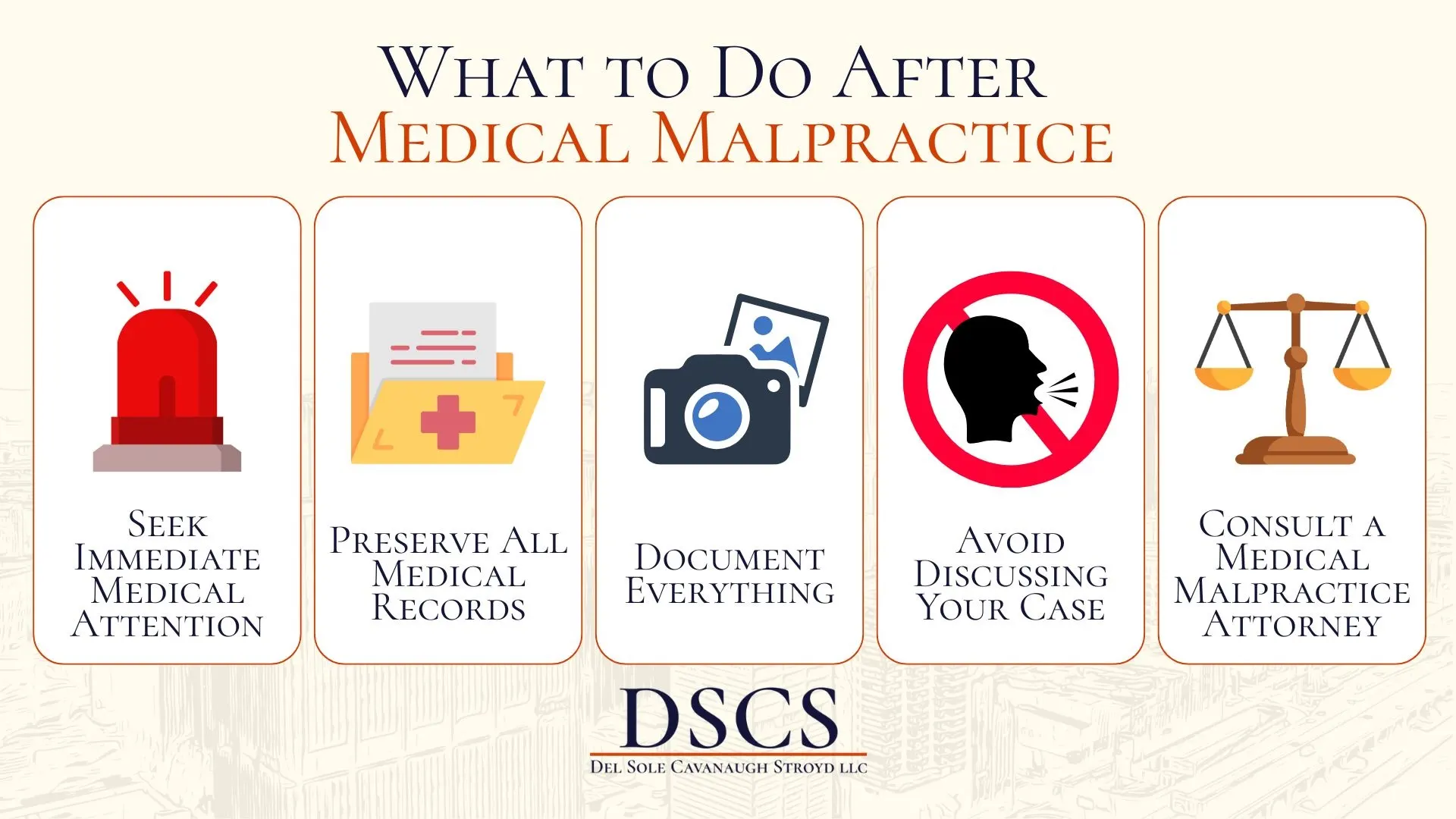
If you believe you or a loved one has been a victim of medical malpractice, taking prompt action is critical to protecting your legal rights.
1. Seek Immediate Medical Attention
Your health and safety come first. Get proper medical treatment from a different healthcare provider to address the injuries caused by the alleged malpractice. This creates a documented record of your condition and the care required.
2. Preserve All Medical Records
Request copies of all medical records related to your treatment, including:
- Doctor's notes and treatment plans
- Test results and imaging studies
- Prescriptions and medication records
- Hospital admission and discharge records
- Bills and insurance statements
3. Document Everything
Keep detailed records of:
- All symptoms and complications
- Conversations with healthcare providers
- Expenses related to additional treatment
- Time missed from work
- Impact on your daily life and activities
4. Avoid Discussing Your Case
Do not sign any documents or give recorded statements to insurance companies without legal representation. What you say can be used to minimize or deny your claim.
5. Consult an Experienced Medical Malpractice Attorney
Time is critical in medical malpractice cases. An experienced attorney can:
- Evaluate whether your case meets the criteria for medical malpractice
- Identify all potentially liable parties
- Secure medical experts to review your case and provide the necessary Certificate of Merit
- Preserve evidence before it is lost or destroyed
- File your claim within Pennsylvania's strict deadlines
- Handle all negotiations with insurance companies
- Take your case to trial if a fair settlement cannot be reached
Protecting Your Rights After Medical Malpractice
When healthcare providers breach their duty of care, the consequences can be devastating and life-altering. Pennsylvania law provides pathways to justice and compensation, but strict procedural requirements and tight deadlines mean you must act quickly to protect your rights.
If you believe you or a loved one has been harmed by medical malpractice, Del Sole Cavanaugh Stroyd LLC provides thorough case evaluations and experienced guidance through every step of the legal process. Contact us today for a free, confidential consultation and get clear, honest answers.

%20(1).avif)