

.avif)



Types of Motorcycle Accidents We Handle
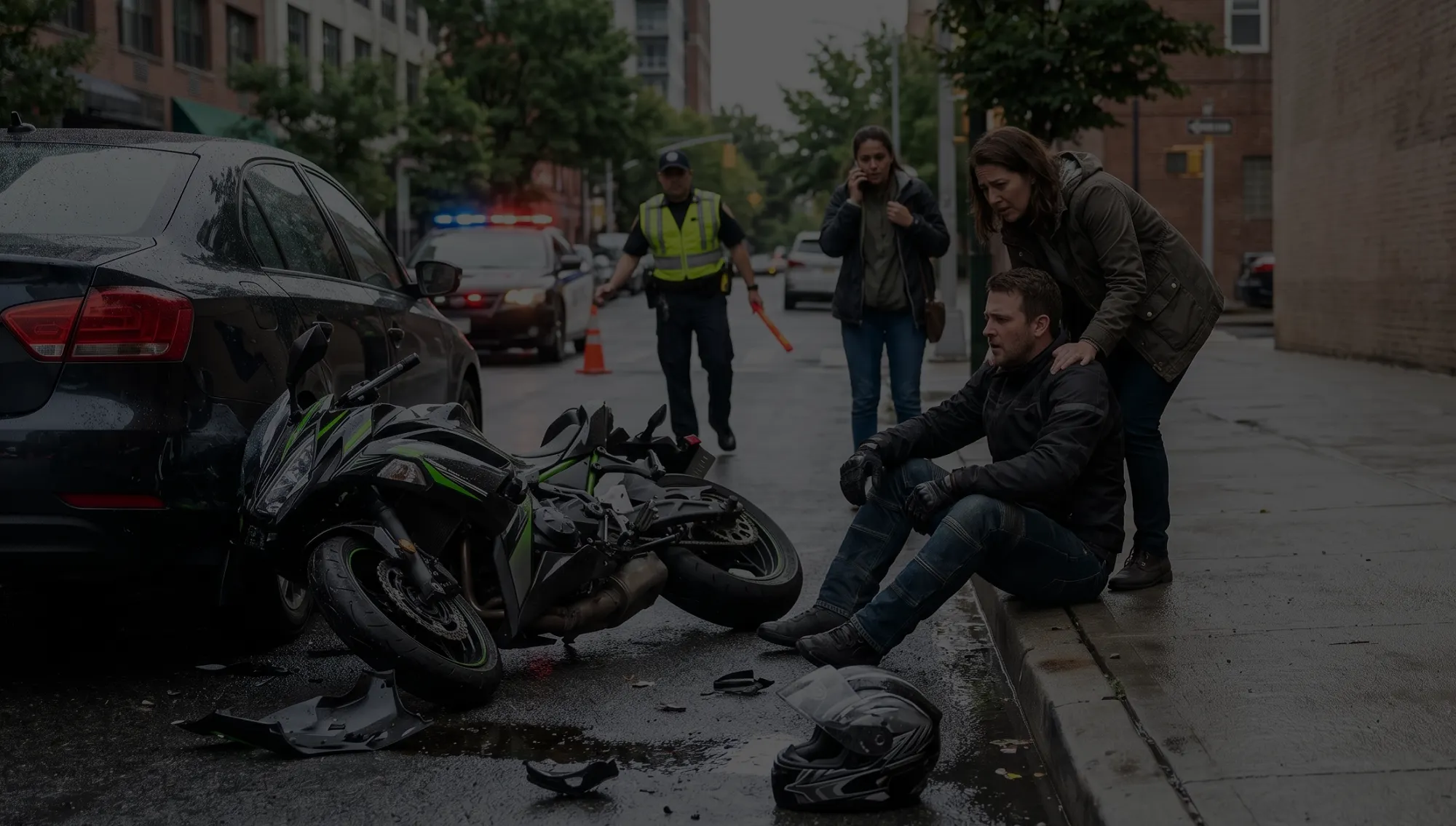
Motorcycle riders face unique dangers on Pittsburgh roads. Unlike car occupants protected by metal frames and airbags, motorcyclists rely solely on helmets and protective gear in crashes. Our Pittsburgh motorcycle accident attorneys have represented injured motorcyclists across every type of collision throughout Western Pennsylvania.
Motorcycle crashes we represent:
- Left-turn collisions where drivers fail to yield;
- Lane-change accidents when motorists don't check their blind spots;
- Rear-end impacts at traffic signals and stop signs;
- Head-on collisions caused by negligent drivers;
- Sideswipe crashes from distracted driving;
- Intersection accidents involving right-of-way violations;
- Highway crashes on I-376, I-279, and Route 28;
- Parking lot incidents with opening car doors;
- Single-vehicle accidents caused by road hazards;
- Multi-vehicle pileups involving motorcycle riders;
- Drunk driver collisions;
- Hit-and-run motorcycle crashes.
Common Motorcycle Accident Injuries
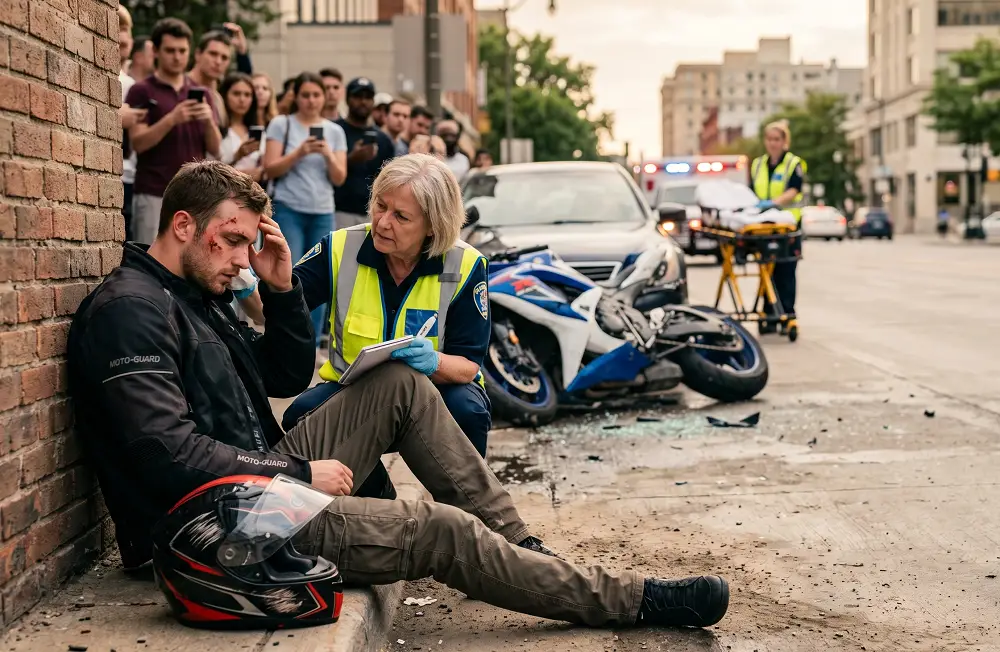
Motorcycle accidents often result in catastrophic injuries requiring immediate emergency care and long-term treatment. Without the protection offered by enclosed vehicles, motorcycle riders absorb tremendous force during collisions. Our legal team understands how these injuries affect every aspect of your life.
Injuries we help motorcycle accident victims recover compensation for:
Head and Brain Trauma
Traumatic brain injuries remain among the most devastating consequences of motorcycle crashes. Even helmeted riders can suffer concussions, skull fractures, and permanent cognitive impairment affecting memory, judgment, and personality. Many victims require extensive neurological rehabilitation and face lifelong challenges.
Spinal Cord Damage
The violent impact of motorcycle collisions frequently causes spinal cord injuries, leading to partial or complete paralysis. These life-altering injuries demand immediate surgical intervention, ongoing physical therapy, and significant home modifications to accommodate wheelchairs and mobility equipment.
Road Rash and Skin Injuries
When motorcycle riders slide across pavement, severe abrasions tear through skin and muscle tissue. Deep road rash often requires skin grafts and multiple surgeries, leaving permanent scarring. These injuries carry a high risk of infection and lengthy recovery periods.
Broken Bones and Fractures
Multiple bone fractures commonly occur when motorcycles collide with vehicles. Motorcycle accident victims often suffer compound fractures of arms, legs, ribs, pelvis, and collarbone requiring surgical repair with metal plates and extended rehabilitation. Complex fractures may result in permanent mobility limitations.
Internal Organ Damage
Blunt force trauma can cause internal bleeding, organ damage, and life-threatening complications that may not appear immediately. Motorcycle riders involved in high-speed crashes often require emergency surgery to repair damage to internal organs.
Amputation and Limb Loss
Severe motorcycle crashes can result in traumatic amputations at the accident scene or necessitate surgical amputation due to extensive damage. Victims face the challenge of adapting to prosthetic devices and learning new ways to perform daily activities.
Emotional Trauma and Mental Anguish
Beyond physical pain, motorcycle accident survivors frequently develop post-traumatic stress disorder, anxiety, and depression. The psychological impact of surviving such a violent event requires ongoing counseling and mental health treatment.
Time Is Working Against You
Insurance companies begin investigating motorcycle accidents immediately. Every hour you wait gives them more opportunity to build a case, minimizing your claim or blaming you for the crash.
Why immediate action protects your rights:
- Evidence disappears quickly: Skid marks fade, witnesses forget details, and accident scene conditions change.
- Bias against motorcycle riders: Insurance adjusters often blame motorcyclists unfairly.
- Pennsylvania's two-year deadline: Miss this window and lose your right to recover compensation.
- They're already investigating: The at-fault driver's insurance company is building their defense now.
Don't let insurance companies take advantage.
Start Your Free Case Review Today
What to Do After a Pittsburgh Motorcycle Crash
Your actions immediately following a motorcycle accident significantly impact your ability to recover fair compensation. These steps protect both your health and your legal rights.
Critical Steps After Your Motorcycle Crash
- Move to a safe location: Move yourself and your motorcycle out of traffic to prevent further collisions.
- Call 911 immediately: Request police and emergency medical services even if injuries seem minor. Adrenaline can mask serious injury symptoms.
- Document the accident scene: Take photographs of your motorcycle damage, the other vehicle, road conditions, traffic signals, and any visible injuries. Capture skid marks, debris, and the surrounding area.
- Gather driver information: Collect the other driver's name, insurance details, license plate number, and contact information. If multiple vehicles were involved, get information from all drivers.
- Identify witnesses: Motorcycle accidents often have witnesses who can verify what happened. Get contact information from anyone who witnessed the collision.
- Seek medical attention: Visit an emergency room or doctor immediately to create medical records documenting your injuries. Some serious injuries, like traumatic brain injuries, may not show immediate symptoms.
- Preserve your riding gear: Keep your helmet, jacket, and other protective gear as evidence. Damage patterns can help prove the accident's severity.
- Contact an experienced motorcycle accident lawyer: Pittsburgh motorcycle accident attorneys understand the bias against motorcycle riders and how to counter unfair assumptions. Get legal representation before speaking with insurance adjusters.
High-Risk Motorcycle Accident Locations in Pittsburgh
Pittsburgh's challenging geography and heavy traffic create dangerous conditions for motorcycle riders. Our Pittsburgh motorcycle accident lawyers have handled cases throughout Western Pennsylvania for decades and understand how location factors affect investigations.
Where Pittsburgh motorcycle accidents commonly occur:
Interstate 376 (Parkway East and West)
Heavy traffic, steep grades, and tight curves create hazardous conditions for motorcyclists. Lane-change collisions and rear-end crashes occur frequently during congestion.
Interstate 279 (Parkway North)
Fast-moving traffic and aggressive lane changes put motorcycle riders at risk. Merging vehicles often fail to see motorcycles in their blind spots.
Route 28 Along the Allegheny River
This major corridor sees frequent motorcycle crashes due to narrow lanes, sharp curves, and limited visibility. Drivers unfamiliar with the road's challenges are responsible for serious collisions.
Downtown Pittsburgh and The Strip District
Heavy pedestrian traffic, delivery vehicles, and distracted drivers create multiple hazards. Opening car doors frequently strike passing motorcyclists.
Oakland (University and Hospital District)
Student drivers and confusing intersections make this neighborhood particularly dangerous. Left-turn collisions involving motorcycle riders happen regularly.
Fort Pitt and Liberty Tunnels
Sudden braking within tunnels and on bridge approaches can trigger chain-reaction crashes. Motorcyclists have limited escape options in these confined spaces.
South Hills Interchanges
Complex merging patterns confuse drivers unfamiliar with local routes, leading to lane-change accidents involving motorcycles.
Pennsylvania Motorcycle Accident Laws
Pennsylvania has specific regulations governing motorcycle operation and the legal rights of injured motorcyclists. Understanding these laws helps protect your ability to recover compensation after a crash.
Pennsylvania Helmet Law
Riders over 21 with at least two years of motorcycle operator experience or completion of an approved safety course may ride without helmets. All riders must wear eye protection. Failure to wear a helmet doesn't automatically bar recovery, but insurance companies may argue that it increased injury severity.
Modified Comparative Fault
You can recover damages even if partially at fault for the motorcycle accident, provided you're less than 51% responsible. Your compensation is reduced by your percentage of fault. For example, if you're 20% at fault, you recover 80% of the total damages.
Two-Year Statute of Limitations
Pennsylvania law gives motorcycle accident victims two years from the crash date to file personal injury lawsuits. Missing this deadline means losing your right to pursue compensation through the courts.
Required Insurance Coverage
Pennsylvania operates under a choice no-fault system. Motorcyclists can select limited tort (restricting pain and suffering claims) or full tort (allowing complete compensation). The at-fault driver's liability insurance must cover the damages they cause.
Lane Splitting Prohibition
Pennsylvania law prohibits lane splitting, which is riding between lanes of traffic. Motorcyclists caught lane splitting may face arguments that they contributed to their accidents, though this doesn't automatically bar compensation claims.
Compensation Available After Motorcycle Accidents*
Our experienced motorcycle accident lawyers pursue complete financial recovery, addressing both immediate needs and long-term consequences of motorcycle crash injuries.
Disclaimer*
Settlement figures reflect past results in similar cases. Every motorcycle crash is unique and requires a thorough investigation. These ranges don't guarantee specific outcomes for your situation. Contact us for an evaluation of your specific motorcycle accident case.
%20(1).avif)
.avif)

.avif)





.avif)

.avif)